BBallet Variation Studio
← Full ballet library

Ballet guide 11 · One-act comic ballet

Graduation Ball

A formal evening in 1840s Vienna becomes a playful celebration of first dances, secret crushes, virtuoso displays, and adults caught breaking their own rules.

Music
Johann Strauss II
Arrangement
Antal Doráti
Choreography
David Lichine
Premiere
Sydney · 1940
Explore the variations
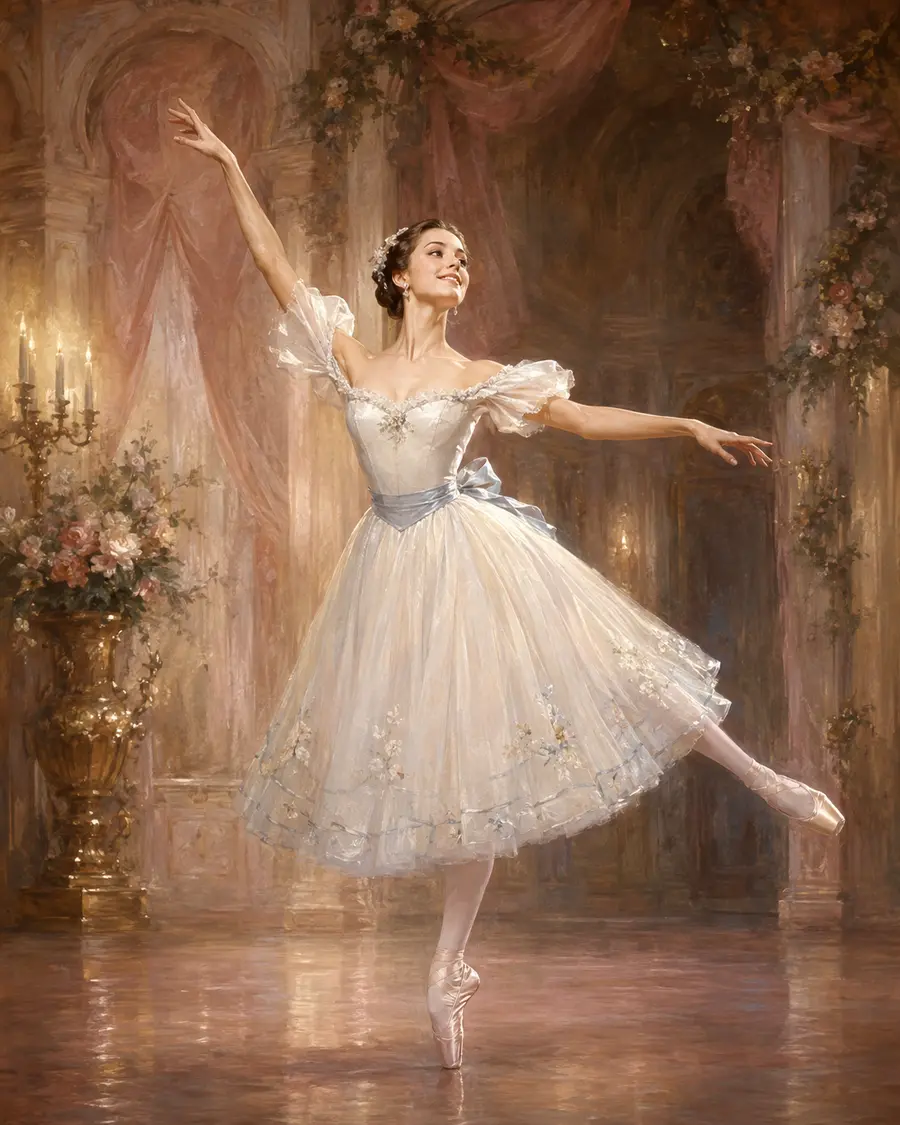
Good Girl dancing in the elegant Viennese ballroom of Graduation Ball

Good Girl · Senior Girl Variation · Graduation Ball

Watch the complete ballet

Enter the ballroom before studying the solos.

Watch how formal entrances soften into courtship, competition, and comedy. Notice how every solo remains connected to classmates, cadets, teachers, and the changing mood of the ball.

Phoenix Ballet / Master Ballet Academy · Spring Show 2024Approximately 38 minutes · playback is hosted by YouTube.

Open supplied reference ↗

Variation in the Finder · The Cadet · The Drummer Variation · Male role

Cadet / Drummer Variation

Watch the Cadet's rhythmic featured solo in the context of the full graduation-night performance. These times are specific to the supplied production.

Start
11:25
End
13:30
Duration
2:05

Variation in the Finder · Naughty Girl · Junior Girl · Female role

Naughty Girl Variation

Watch the mischievous Pigtail Girl's variation as part of the ballroom's playful character comedy. These times are specific to the supplied production.

Start
19:12
End
21:14
Duration
2:02

Variation in the Finder · Good Girl · Senior Girl · Female role

Good Girl Variation

Watch the Romantic Girl's polished, charming solo within the same supplied production. These times are specific to the supplied production.

Start
21:21
End
22:43
Duration
1:22

The complete story

One evening turns etiquette into exuberance.

Graduation Ball is less a plot-heavy drama than a character comedy. Its simple school celebration creates a frame for waltzes, solos, theatrical divertissements, flirtation, and affectionate parody.

01

Chapter

The ballroom is prepared

In a fashionable Viennese finishing school in the 1840s, the students inspect the ballroom and excitedly prepare for graduation night. The Headmistress tries to preserve order while Junior and Senior Girls rehearse their manners, admire their dresses, and anticipate the arrival of their guests.

The comedy begins before the formal ball does. Small rivalries, mirrors, powder puffs, and barely contained excitement reveal the girls as distinct personalities rather than a perfectly disciplined school ensemble.

02

Chapter

The cadets arrive

An Old General leads cadets from the nearby military academy into the ballroom. Girls and cadets initially stand apart in awkward formality, but the mischievous Pigtail Girl breaks the tension and the young people gradually begin to waltz together.

A shy Junior Cadet and a poised young woman find each other inside the group. Their hesitant courtship gives the evening a gentle romantic thread while the ensemble discovers the pleasure of dancing together.

03

Chapter

The students put on a show

The ball becomes a stage for a sequence of divertissements: a Drummer Boy solo, a playful homage to La Sylphide, virtuoso dancing, a comic lesson, and a competitive display by rival ballerinas. The exact order and selection can vary by production.

Each number has its own theatrical flavor, but all belong to the same social event. Classical technique, character dancing, parody, and schoolgirl mischief continually interrupt the ballroom's polished etiquette.

04

Chapter

The adults are caught

When the students leave for supper, the Headmistress and Old General remain behind and reveal a flirtation of their own in a comic mazurka. The young people return, discover the embrace, and answer it with delighted teasing and a high-spirited galop.

After the guests depart, a girl and cadet secretly return for one last meeting—only to encounter the Headmistress and General doing exactly the same. The adults restore discipline with comic hypocrisy, and the curtain falls on the interrupted rendezvous.
Meet the characters

A ballroom full of distinct personalities.

The ballet's charm depends on relationships. Rank, age, shyness, rivalry, and mischief should remain legible even when the stage is filled with dancers.

01

Guardian of school decorum

The Headmistress

She organizes the evening with strict authority, then becomes part of the joke when her own attraction to the Old General proves stronger than the rules she enforces.

02

Leader of the visiting cadets

The Old General

Ceremonial and dignified on arrival, he grows increasingly animated by the festivities and joins the Headmistress in the ballet's affectionate comic romance.

03

Naughty Girl · Junior Girl variation

The Pigtail Girl

Bold, curious, and impossible to contain, she breaks the ice between the two schools, inserts herself into the entertainment, and returns for a secret meeting after the ball.

04

Good Girl · Senior Girl variation

The Romantic Girl

Also called the Senior or Good Girl, she brings a lyrical, composed quality to the youthful excitement and forms a shy partnership with a cadet.

05

Young romantic lead

The Shy Cadet

Initially reluctant to cross the ballroom, he gradually joins the waltz and becomes the Romantic Girl's partner. His dancing should stay buoyant, gallant, and warmly comic.

06

The graduating class

The Senior Girls

Their party dresses and polished manners give them a more assured social presence, but they share the younger students' excitement once the formal evening becomes a celebration.

07

The Cadet · Male variation

The Drummer Boy

His brilliant rhythmic variation is one of the ball's featured entertainments, combining military character with quick, buoyant classical dancing.

08

Virtuoso competitors

The Rival Ballerinas

Two students turn technical display into theatrical comedy through a dance-step or fouetté competition, each trying to outshine the other before the assembled guests.

Competition variations

Three ways to belong in the same ballroom.

Ballet Variation Studio currently includes Good Girl (Senior Girl), Naughty Girl (Junior Girl), and Male versions associated with Graduation Ball. Titles and choreography can vary between schools, so confirm the selected edition with the coach.

Open the Variation Finder
  1. 01

    Good Girl Variation

    Senior Girl · Female · Intermediate

    A bright, youthful solo with polished carriage, generous extensions, balances, quick footwork, and open-hearted character. The movement should feel eager and charming rather than mischievous.

    Extensions · balances · quick footwork · character acting

  2. 02

    Naughty Girl Variation

    Junior Girl · Female · Advanced

    A lively, character-driven waltz variation with controlled pointe articulation, turns, sustained upper-body placement, and playful theatrical detail. The mischief should stay elegant and musically precise.

    Balances · pirouettes · extensions · waltz phrasing

  3. 03

    Male Variation

    The Cadet / The Drummer Variation · Male · Intermediate

    A buoyant cadet solo shaped by crisp batterie, petit allegro, larger jumps, and gallant presentation. Military character should sharpen the dancing without making the upper body rigid.

    Batterie · petit allegro · grand jumps · character acting

For variation students

Technique should feel like conversation.

Watching the full ballet clarifies why these variations need more than steps. Every balance, turn, jump, and gesture is part of a social exchange unfolding under the Headmistress's watchful eye.

Return to the performance
  1. 01

    Let the waltz travel

    Feel the rise, fall, and turning sweep of each three-count phrase. Avoid dancing every step with equal weight; the music should carry the body across the ballroom.

  2. 02

    Dance with an imaginary room

    Use eye focus and épaulement to acknowledge partners, classmates, and guests. Even a solo should feel embedded in a crowded social event rather than presented in isolation.

  3. 03

    Keep comedy truthful

    Build the character from clear intention and musical timing. Small reactions often read more strongly than exaggerated faces or gestures that interrupt classical placement.

  4. 04

    Separate rank from stiffness

    Cadet posture and school etiquette create clean shapes, but plié, breath, and easy coordination must remain available so the dancing stays buoyant.

Behind the ballet

A Ballets Russes comedy created in Australia.

David Lichine created the one-act ballet for the Original Ballet Russe during its Australian tour. It premiered at Sydney's Theatre Royal on March 1, 1940, with designs by Alexandre Benois and Antal Doráti conducting his arrangement of music by Johann Strauss II.

Doráti shaped familiar Viennese dance energy into a theatrical score using waltzes, polkas, mazurka, and galop. The production's 1840s setting and affectionate school comedy made it an immediately accessible showcase for both character roles and classical virtuosity.

Later stagings preserve the central invitation—a girls' finishing school welcomes military cadets to graduation night—while individual divertissements, role names, and choreography may differ. Study the production chosen by the dancer's coach.

Wise Music programme note ↗Teatro Colón synopsis ↗Rome Opera historical archive ↗Theatre Heritage Australia ↗
Feedback / Report a bug