Act I · Pas de Trois
Pas de Trois · Variation 2
The second girl's solo from the Act I trio, shown in the supplied Jihyun Choi performance reference. The music and numbering can differ between productions.
Full ballet · A lost identity and a love story
Paquita, a young woman raised by traveling performers, falls in love with a French officer and saves him from an assassination plot. A family secret later reveals that she is of noble birth, allowing them to marry.
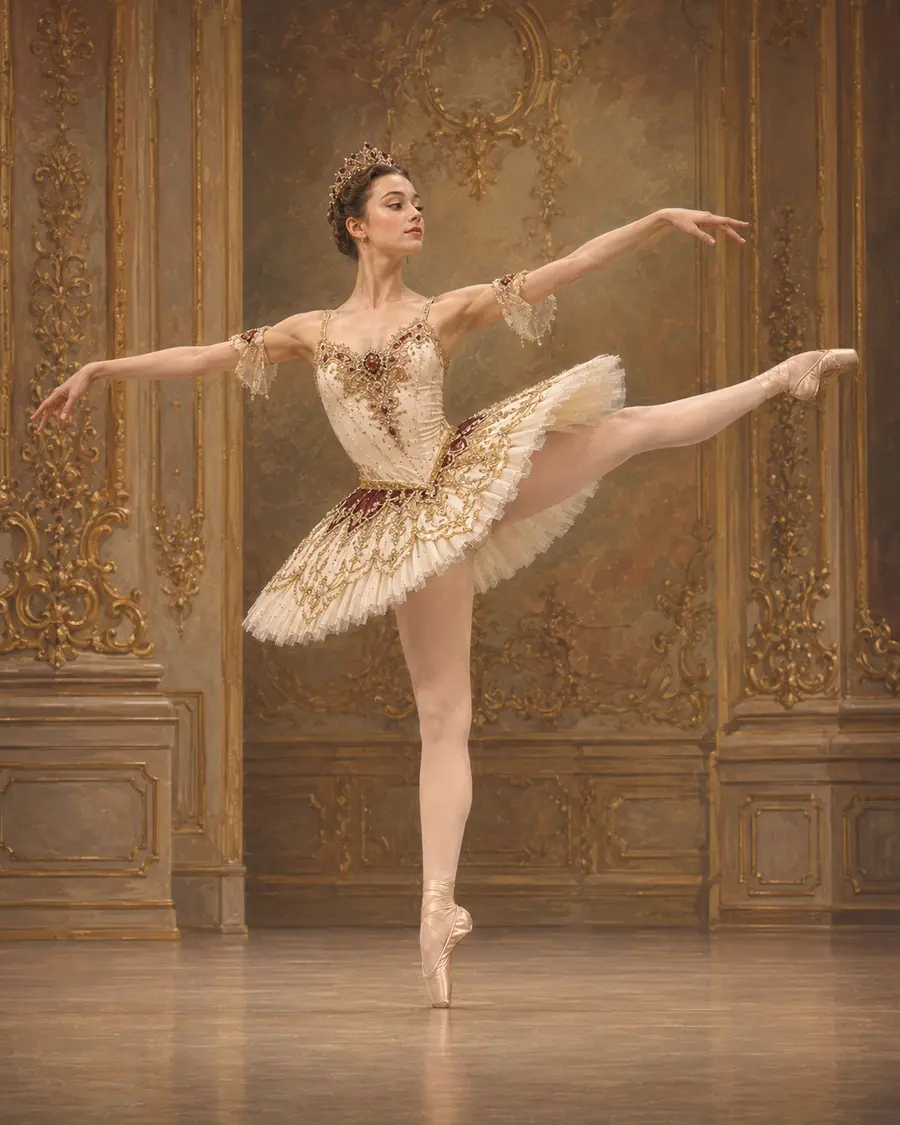
Paquita · Grand Pas Classique
Watch the performance
Watch your selected Paquita ballet video on YouTube. Different productions use different choreography and sometimes divide the story into two or three acts. The famous Grand Pas Classique is also often performed by itself.
Paquita · Selected performancePlayback hosted by YouTube · begins at 00:00
Open supplied video on YouTube ↗Act I · Pas de Trois
The second girl's solo from the Act I trio, shown in the supplied Jihyun Choi performance reference. The music and numbering can differ between productions.
Grand Pas Classique
A principal ballerina's solo from the grand celebration, traditionally associated with Paquita's wedding. The music and numbering can differ between productions.
Grand Pas Classique
One of the women's solos performed during the festive Grand Pas Classique. The music and numbering can differ between productions.
The story
Follow how Paquita meets Lucien, discovers a plot to kill him, and learns the truth about her family. These three story sections are a guide; the act divisions vary by production.
Spain during the Napoleonic occupation
Paquita is a young woman raised by a traveling troupe, unaware that she was born into a noble family. She meets Lucien d'Hervilly, a French officer who falls in love with her. Paquita cares for him too, but believes their different social positions make marriage impossible.
In the original story, Paquita and Lucien's relationship begins against the tensions between the occupying French army and the people of Spain.
The conspiracy
Don Lopez de Mendoza, a Spanish governor hostile to the French, joins forces with Iñigo, who is jealous of Lucien. Together, they plot to kill the young officer. Paquita discovers their plan and warns Lucien in time to save his life.
Paquita's courage brings the two closer, even though she still believes they cannot marry.
The celebration
At a gathering of Lucien's family, Paquita recognizes a portrait that matches the image in her treasured medallion. She learns that she is of noble birth and was separated from her family as a child. Her identity is restored, and she and Lucien can finally marry.
Their happy ending is celebrated with dancing. In Petipa's later version, the famous Grand Pas Classique is part of this festive finale.
Characters
Paquita and Lucien are at the heart of the ballet. Their love story unfolds against political conflict, jealousy, and the mystery of Paquita's childhood.
The heroine
Raised by traveling performers, Paquita does not know she comes from a noble family. She bravely saves Lucien and later discovers her true identity.
The French officer
Lucien falls in love with Paquita. He wants to marry her despite their apparent difference in social position.
Paquita's jealous admirer
Iñigo joins a plot against Lucien, hoping to prevent Paquita from being with the officer.
The Spanish governor
Hostile to the French occupation, the governor conspires to have Lucien killed.
The key to Paquita's past
A family portrait and Paquita's medallion reveal the truth about her childhood and noble ancestry.
Ballet history
1846 · Paris. Paquita premiered at the Paris Opera with choreography by Joseph Mazilier and music by Édouard Deldevez. Carlotta Grisi danced the title role.
1847 · St Petersburg. Marius Petipa staged Paquita in Russia early in his career. He later revived it with additional choreography.
1881–82 · The Grand Pas. Petipa's revival added the Grand Pas Classique, with music by Ludwig Minkus. This wedding celebration, with its ensemble dances and featured solos, became the best-known part of Paquita.
Today. The complete story ballet is performed less often than its Grand Pas Classique. Modern reconstructions and new stagings may have different scene orders, casts, scores, and endings.